-
English (US)
Choose your country or region:
Europe
Asia - Australasia
Middle East - Africa
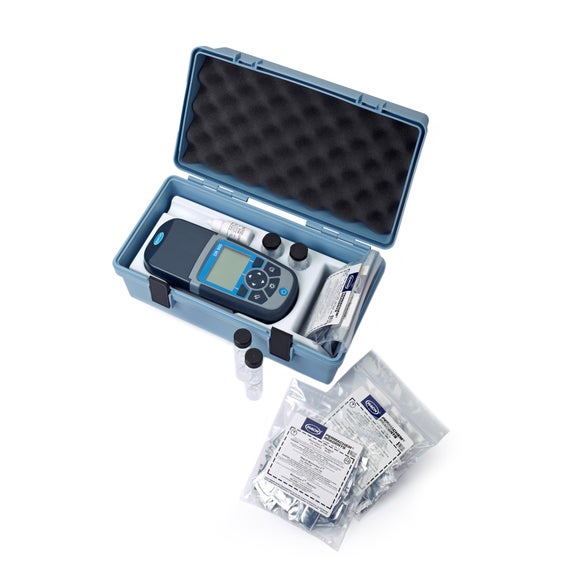
Product Number: 2882200
The Hach Nitrification Monitoring Test Kit helps drinking water utilities monitor nitrification in chloraminated distribution systems by measuring free ammonia, monochloramine, nitrite, and chlorine residuals using a portable DR900 colorimeter.
Nitrification Control Test Kit
Monitor early signs of nitrification in chloraminated drinking water systems before disinfectant residual loss impacts water quality compliance.
Key Values
• Portable field-ready testing with DR900 Colorimeter
• Detect nitrification risk earlier
• Monitor free ammonia, monochloramine, nitrite, and chlorine residuals
• Designed for chloraminated distribution systems
• Support regulatory compliance and water quality stability
Applications
The Hach Nitrification Control Test Kit is designed for:
• Municipal drinking water utilities using chloramination
• Distribution system nitrification monitoring programs
• Water quality troubleshooting
• Chloramine residual management
• Legionella and Naegleria fowleri risk reduction initiatives
• Free ammonia and nitrite monitoring
Why Monitor Nitrification?
Nitrification is a biological process that can occur in chloraminated drinking water systems when ammonia-oxidizing bacteria convert ammonia into nitrite and nitrate. As nitrification progresses, utilities may experience:
• Loss of disinfectant residual
• Increased nitrite levels
• Elevated bacterial growth
• Taste and odor complaints
• Corrosion risk from lower pH
• Increased risk of total coliform detection
• Distribution system instability
Routine monitoring of free ammonia, monochloramine, nitrite, and chlorine residuals helps operators identify nitrification conditions before they impact compliance or water quality.
Who Uses This Test Kit?
• Municipal drinking water utilities
• Distribution system operators
• Water quality laboratories
• Environmental compliance teams
• Public health agencies